Quick verdict
Seven years of waiting produced something rare: a sequel that critics broadly rank alongside, and often above, the original Hollow Knight. Silksong is tougher, faster and stingier than its predecessor, and that edge is exactly what divides its few detractors from its many devotees. For $19.99 on Steam, it remains one of the most generous and carefully crafted indie games you can buy.
What it is
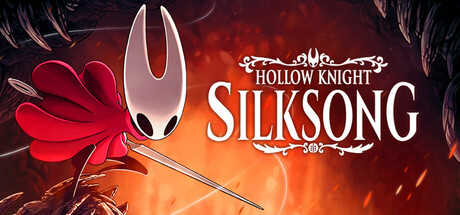
Hollow Knight: Silksong is a 2D action platformer in the Metroidvania mould from Team Cherry, the small Adelaide studio behind Hollow Knight. It launched on September 4, 2025, across Windows, macOS and Linux via Steam, plus Nintendo Switch, Switch 2, PlayStation and Xbox. You play as Hornet, the needle-wielding princess from the first game, who is captured and carried to an unfamiliar kingdom called Pharloom and must climb toward its glittering citadel. The base game costs $19.99 on Steam, with a soundtrack bundle sold separately.
Gameplay
The big change is Hornet herself. Where the Knight was deliberate and a little stiff, Hornet sprints, lunges, clings and spins, and reviewers keep returning to how much that speed reshapes everything around it. IGN singled out its sharp platforming and nail-biting combat, while PC Gamer described movement settling into a satisfying rhythm of jumps and dodges that keeps getting more intricate as new abilities arrive.
Healing is now tied to silk, which Hornet builds by landing hits and spends in one quick burst rather than a slow channel. Crests change her attack style, and a growing kit of tools (thrown pins, traps, gadgets) can be crafted and swapped at benches. Exploration still rewards the curious: hidden rooms, cryptic shortcuts and side characters with small requests to fulfil. PC Gamer found helping Pharloom’s bug townsfolk genuinely rewarding, and Nintendo Life praised a map dense with secrets.
Bosses are the headline act for most outlets. Nintendo Life awarded a perfect 10 and argued that everything about the game pushes you to learn and improve, and GameSpot felt Silksong took the best parts of its predecessor and somehow improved on them. Not everyone agreed. VGC’s 3 out of 5 review argued that many encounters become attrition battles, that most enemy hits take two of Hornet’s five starting masks, and that the game is too often “testing your patience” rather than your skill.
Graphics and sound
This is where the praise is close to unanimous. Pharloom is hand drawn in moody layers of moss, bone, brass and silk, and PC Gamer pointed to tunnels and cathedrals full of environmental clues to the kingdom’s history. Even VGC, the harshest major review, admired the art and animation. Christopher Larkin returns as composer, and his score earned special mention from Nintendo Life, while PC Gamer was charmed by a gentle song sung by a small character named Sherma. If you love games that feel lovingly handmade, few recent releases look or sound this distinctive.
Controls and performance
Hornet’s controls are widely described as fluid and precise, and that precision matters because the margin for error is slim. On Switch 2, Nintendo Life reported a seamless experience in both handheld and docked modes, with a 120fps mode that its second-opinion reviewer felt made boss fights noticeably more responsive.
Team Cherry has kept polishing since launch. A March 2026 patch, which the studio called its last significant update before the expansion, added Traditional Chinese, overhauled the German text and smoothed several rough edges, including softening a damaging explosion from the Last Judge boss.
Content and value
Value is hard to argue with. PC Gamer logged more than 25 hours, and Nintendo Life spent over 60 hours exploring, which tells you how much depth sits beneath the critical path for completionists. Better still, Team Cherry has announced Sea of Sorrow, a free nautical expansion with new areas, bosses and tools, slated for 2026 on every platform. The only paid add-on on Steam is the official soundtrack.
The economy is the main caveat. Rosaries, the game’s currency, are scarce early on and dropped on death, and PC Gamer noted that some checkpoints and services cost money, which can make a bad run feel doubly costly. Even Nintendo Life, in an otherwise glowing review, called the late-game rosary and shard economy “a little stingy.”
Where opinions split
The divide is less critics versus players than a split inside both camps over difficulty. OpenCritic shows a Top Critic Average of 91 with 96% of critics recommending it, and Metacritic sits at 92. Steam players are almost as warm, with 93% of more than 147,000 English reviews positive.
The dissent centres on runbacks, the trips from a bench back to a boss after each failure. VGC called several of these tedious and criticised bench placement, and PC Gamer wished for options to soften the harshest punishments. Plenty of players and critics push back, arguing that the friction is part of what makes victories land. Recent Steam reviews hover around 91% positive, suggesting the game’s reputation has held steady well after the launch excitement faded.
Who should play it, and who should skip it
Play it if you loved Hollow Knight, enjoy learning a boss pattern one failed attempt at a time, or simply want a beautiful world to get lost in for dozens of hours. It is also a fine showcase of how much a tiny team can achieve with a clear artistic vision.
Skip it, or at least go in prepared, if steep difficulty and lost progress sour your evenings. There are no difficulty settings, the opening hours are punishing, and the currency system can feel mean. Newcomers to the genre may find a gentler Metroidvania a better first step.
Final thoughts
Silksong is the kind of small studio triumph that makes indie gaming so exciting: a game with its own voice, its own music and its own stubborn ideas about challenge. Critics place it among the best of its genre, players overwhelmingly agree, and the free Sea of Sorrow expansion promises even more to discover. Just bring patience along with your curiosity.
Strengths
- Fast, fluid movement makes Hornet a joy to control
- Inventive, demanding boss fights that reward mastery
- Gorgeous hand-drawn world and a standout Christopher Larkin score
- Huge, secret-packed map for $19.99, with a free expansion announced
- Strong post-launch support and patches
Weaknesses
- Long runbacks to bosses frustrate some critics and players
- Scarce rosaries make the economy feel stingy
- Harsh two-mask damage and no difficulty options
- Some side quests boil down to simple kill or fetch tasks